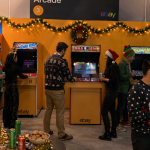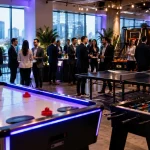

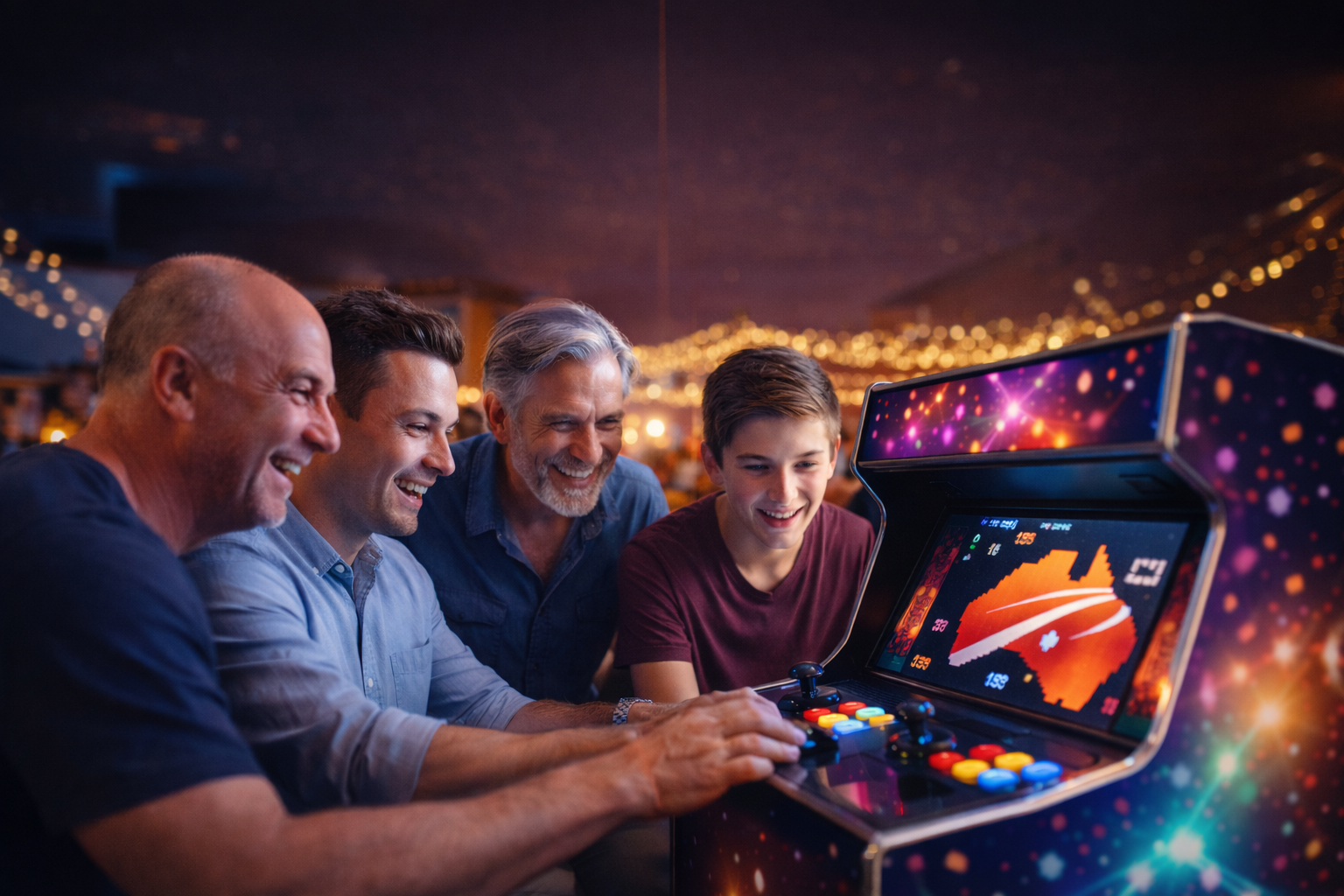
The arcade games that work best for corporate team building are those that create genuine competition without requiring any gaming experience — basketball shooters, reaction tester boards, and retro arcade cabinets with score-based games. These machines put a graduate and a senior manager on genuinely equal footing.
This guide explains the psychology behind why arcade hire for corporate team building works, which specific machines produce the best results, and how to structure the activity to get maximum engagement.
Most corporate team building activities fail for the same reason: they feel artificial. The challenge is designed, the team is assembled, the facilitator is paid to draw connections that wouldn’t exist organically. Participants know they’re being team-built, and that awareness creates a performance rather than a genuine connection.
Arcade machines work differently. They create a real challenge with a real score and a real winner. The competition isn’t manufactured — it’s the same competitive structure that humans have engaged with naturally since childhood. No one is pretending to care who has the fastest reaction time. They actually care.
The result is authentic reactions — frustration, triumph, the urge to try again. When a normally reserved finance manager suddenly demands a rematch, that’s a real interaction. When the whole team crowds around to watch the CEO attempt the high score for the third time, that’s genuine shared experience. You can only create the conditions for those moments to happen.
Three machines consistently deliver the best results where competition is the mechanism — and two more where you want genuine collaboration instead.
The scoring is transparent and immediate — everyone in the room can see the score, which creates a natural audience. Quick game sessions of 60–90 seconds mean high rotation, low wait time, and lots of fresh competitors. It works for mixed fitness levels because skill matters more than physical conditioning.
An underrated team building machine. The game is simple — react to stimuli as fast as possible — and requires no prior gaming experience or cultural knowledge. A 55-year-old who doesn’t play games can beat a 25-year-old gamer on raw reaction time, and that unexpected result creates genuine team moments.
Select specific high-score games from the retro cabinet library — Pac-Man, Space Invaders, Donkey Kong — and turn them into team challenges. Short enough for quick rotation, familiar enough that no explanation is needed, difficult enough that beating the leader feels genuinely satisfying.
Many retro arcade games have two-player cooperative modes, where players work together against the game rather than against each other. This creates a genuinely different dynamic: shared success and shared frustration rather than competition.
Configure any competitive machine as a relay — each team member plays for 30 seconds and the team’s score is cumulative. This turns an individual game into a collective result and creates the specific type of interdependence that good team building is trying to generate.
We help HR managers and event planners choose the right machines for their team format. Get a recommendation and a quote within 24 hours.
Corporate teams are diverse — different ages, different physical capabilities, different cultural backgrounds, different gaming experience levels. The best team building machines are those that don’t exclude any part of the team. Three exclusion criteria to avoid:
The machines that best satisfy all three criteria: reaction tester boards, which need no cultural knowledge and minimal physical effort; basketball shooters, physical enough to be engaging but not exhausting; and retro arcade cabinets with basic game selections.
The machine provides the context, but the structure determines how effectively it produces team building outcomes. Three formats that work well:
Create a bracket-style competition with teams competing head to head. The format creates investment in the outcome, a clear shared narrative — we won that heat, we lost that final — and a natural conclusion with a winner to celebrate.
Divide into teams of equal size. Each member plays for a set time or number of games and teams accumulate a combined score. This distributes performance across the team, so no single person carries or loses it for everyone, and creates genuine collaborative tension.
No teams. Everyone plays for themselves, scores are posted on a leaderboard, and the interaction around the leaderboard — the trash talk, the encouragement, the “just one more try” — becomes the social moment. Works best for smaller teams where everyone knows each other well.
The machine provides the context, but the structure determines how effectively it produces team building outcomes. Three formats that work well:
A physical or digital leaderboard transforms an arcade machine from entertainment into a team event. The leaderboard creates persistence — the score matters not just in the moment but throughout the event. Guests return to check standings, to try to improve their position, to see who’s been beaten while they were in a meeting.
Prize structures work well for team building formats. Prizes don’t need to be valuable — a novelty trophy, a team lunch booking, a branded item — they just need to make the competition feel consequential. The prize is the excuse for people to care. The actual value is in the interaction and the experience that caring creates.
For corporate team building events where brand identity is part of the brief — annual strategy days, company milestones, events for external stakeholders — a branded arcade machine for team building events adds a layer of intentionality to the entertainment.
A machine wrapped in company colours and carrying the company logo signals that this event has been considered and produced. It photographs well, creates social sharing, and makes the team building element feel like part of a cohesive event experience rather than an afterthought.
For team building events across multiple Australian cities — when a company is running the same team day in Melbourne, Sydney and Brisbane — consistent branded machines create consistent brand experiences regardless of location. That is particularly valuable for companies with national teams that don’t often work together in person.
Tell us about your team size, event format and venue, and we’ll recommend the right machines for your specific team format.
The most effective arcade games for corporate team building are those that create genuine competition without requiring gaming experience: basketball shooters, reaction tester boards, and retro arcade cabinets with score-based games. These machines create natural team dynamics — challenge, competition, collaboration — without anyone feeling excluded.
Arcade machines create shared experiences that bypass normal workplace social hierarchies. A competitive game puts a graduate and a director on equal footing. The resulting interactions — competition, coaching, celebration, gentle teasing — build genuine rapport in ways that structured team building activities rarely achieve.
Yes. Branded leaderboards can be configured on most machines, displaying team scores in real time. For team building formats, leaderboards can be configured by team rather than individual — reinforcing collaborative competition rather than individual ranking.
Tell us about your team size, event format and venue, and we’ll recommend the right machines for your specific team format.